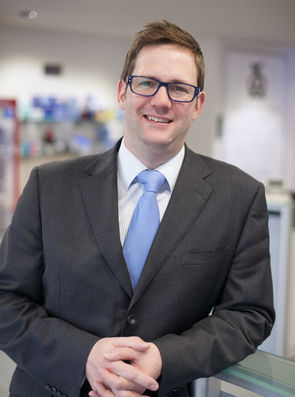
Alisdair Buchanan B.Sc., MCOptom., F.B.D.O., Dip.O.D. - Senior Consultant Optometrist
When people ask me what makes Buchanan Optometrists different, my answer is always the same: everything we do has a reason.
Whether it's the frames we choose to stock, the technology we invest in, the treatments we offer or the amount of time we spend with each patient, every decision is made with one goal in mind – providing the very best care possible.
My journey into optics began in 1991, qualifying first as an Ophthalmic Dispensing Optician before going on to qualify as an Optometrist. Looking back, I wouldn't change that path for anything. It gave me a unique understanding of both the science of the eye and the art of helping people see comfortably, which continues to influence the way I care for patients today.
In 2000, Kathryn and I took over Buchanan Optometrists with a simple ambition: to create the kind of practice we would want to visit ourselves. A practice where patients are never rushed, where technology is used because it genuinely improves care, and where every person is treated as an individual rather than another appointment in the diary.
Over the years, that philosophy has been recognised nationally through multiple Optician Awards, including Optometrist of the Year, Independent Practice of the Year, Technology Practice of the Year, Individualised Lens Practice of the Year and Hearing Care Practice of the Year. Whilst I am incredibly proud of these achievements, I have always viewed them as a reflection of our team's shared commitment rather than personal milestones.
One area I am particularly passionate about is dry eye disease. It is often dismissed as a minor irritation, yet for many people it can be genuinely debilitating—affecting work, driving, reading, sleep and even mental wellbeing. Helping someone regain comfort after months or years of discomfort is one of the most rewarding parts of my job. I believe successful treatment requires more than simply prescribing drops; it means understanding the whole person, including their health, lifestyle, environment and wellbeing.
I have always believed that our eyes can tell us far more than how well we see. They can provide valuable insights into our general health, which is why we take a holistic approach to every examination. Looking after your vision also means considering your overall health, nutrition, lifestyle and long-term wellbeing.
Technology has transformed modern eye care, and I have always enjoyed exploring how new innovations can improve the patient experience. We were early adopters of advanced retinal imaging, specialist dry eye diagnostics and, more recently, artificial intelligence. Used responsibly, AI is an incredible tool that supports clinical decision-making, helps detect disease earlier and allows us to spend more time focusing on what matters most—our patients.
Education has always been an important part of my career. I have lectured at Moorfields Eye Hospital on dry eye disease, appeared on BBC television and radio, contributed to newspaper articles and regularly provide professional comment on developments in eye care. I enjoy sharing knowledge with colleagues, but I never stop learning myself. Every year brings new research, new technologies and new ways of helping patients, and I believe continual learning is essential if we are to provide the highest standard of care.
Perhaps the achievement I am proudest of isn't an award at all—it's the team we have built. I firmly believe that happy, supported people provide the very best care. We encourage every member of our team to grow professionally while recognising that they also have families, interests and lives outside the practice. That positive culture is reflected in the way we care for every patient who walks through our doors.
For me, optometry has never simply been about prescribing glasses. It is about protecting sight, improving quality of life and helping people live healthier, happier lives. Every investment we make, every piece of equipment we purchase and every service we introduce is driven by one simple question:
Will this genuinely make life better for our patients?
If the answer is yes, then it's worth doing.